


Prof. Dr. Berk Canberk
Cyber Security and Systems Engineering
School of Computing, Engineering &
The Built Environment
Edinburgh Napier University, UK
The Digital Twin (DT) are set to enable artificial-intelligence (AI)-based control, real-time optimisation, and accurate what-if analysis in the upcoming 6G era. For this, DT handles data at high volume, velocity, and heterogeneity across radio access, transport, and core network domains. However, their scalability is challenged by the strict latency, bandwidth, and reliability requirements of AI-Native 6G Networks.
At this, the distributed deployment of DT across the edge-cloud continuum of 6G is vital. This challenges the real-time operation due to required synchronisation, interoperability, and contextual alignment across Distributed DT instances. Therefore, this talk will focus on the architectural requirements for the Distributed Digital Twin as a Service (DTaaS) from a network-specific perspective. Furthermore, the discussions will highlight key performance indicators, knowledge graphs, and edge intelligence.
BiographyBerk Canberk (Senior Member, IEEE) is a Full Professor and Head of Subject (Department Chair) for Cybersecurity and System Engineering at Edinburgh Napier University, UK. His research focuses on AI-powered Digital Twins, IoT communication, and Smart Wireless Networks, spanning Technology Readiness Levels (TRL) 1 to 6. As a leading expert in Digital Twin technologies, he specializes in real-time synchronization, AI-driven orchestration, and semantic communication frameworks. He leads the Broadband Communication Research Group (www.bcrg.uk) with 5 PhD students, 1 postdoctoral researcher, 2 research associates, 1 visiting professor, and 1 visiting MSc student. He has previously supervised 7 PhD and 21 MSc graduates. His publication record includes more than 103 journal articles, 103 conference papers, and 23 patents, of which 48 journal articles, 43 conference papers, and 18 patents are specifically focused on Digital Twins.
Since 2015, he has secured over £3.6M in research funding as Principal Investigator. He serves as one of the 15 Area Editors for IEEE Communications Surveys and Tutorials (The journal in entire IEEE with highest Impact Factor of 46.7), Lead Editor of the IEEE ComSoc Best Readings in Digital Twins, Associate Editor in IEEE Transactions on Network Science and Engineering, and as Guest Editor in Digital Twins at the IEEE Journal on Selected Areas in Communications. He has also served as Associate Editor for IEEE Transactions on Vehicular Technology, Elsevier Computer Networks, and IEEE Communications Letters, and has taken on key roles as General Chair, TPC Chair and Organizing Committee Member at several IEEE conferences. Prior to his current position, he was a Full Professor at Istanbul Technical University (ITU), where he served as Associate Professor (2016–2021) in Computer Engineering Department and Full Professor (2021–2022) in Artificial Intelligence and Data Engineering Department. He was previously a Postdoctoral Researcher at the Georgia Institute of Technology, USA. He holds a PhD in Computer Science from ITU, an MSc in Telecommunications Engineering from Chalmers University of Technology, Sweden, and a BSc in Electrical Engineering from ITU.
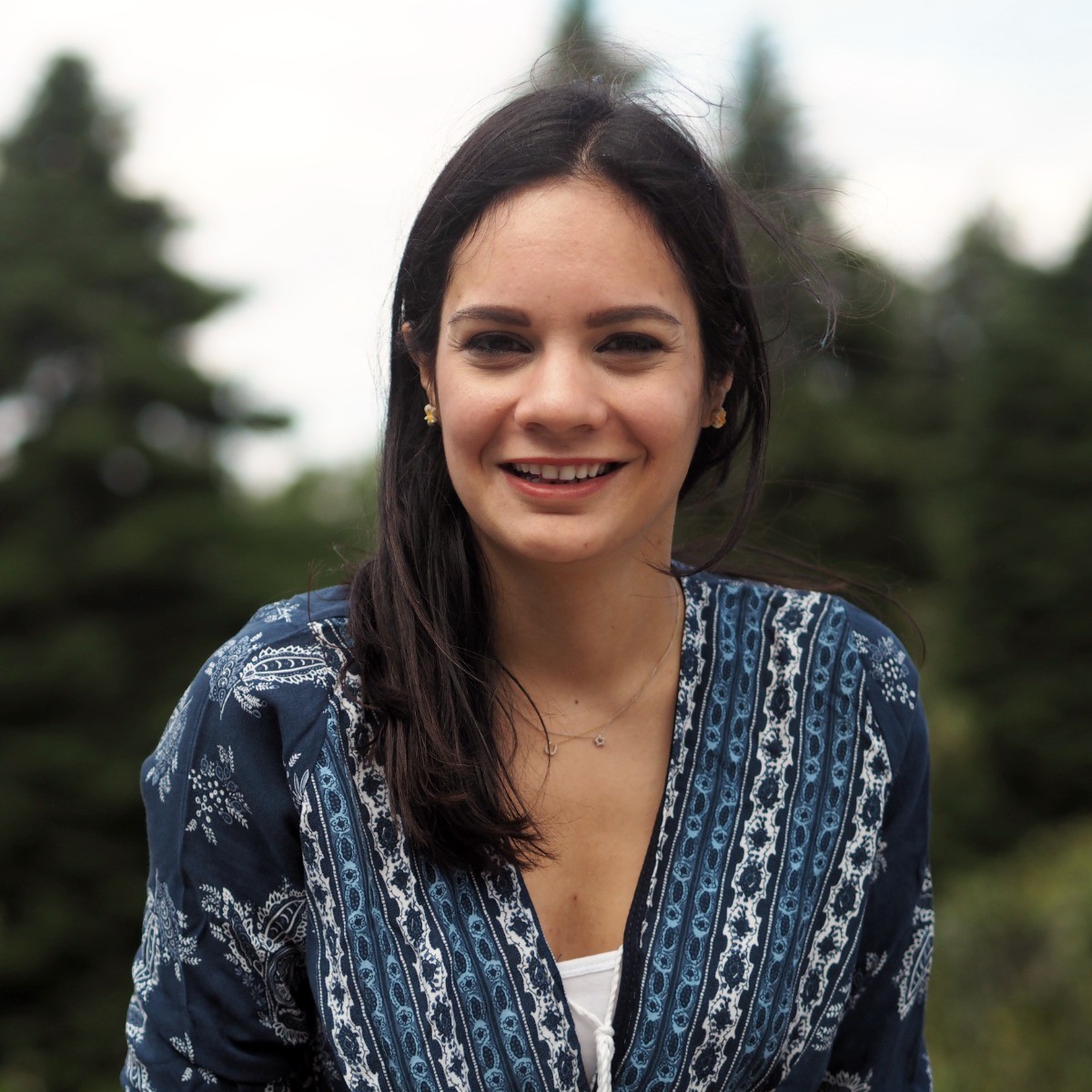
Assoc. Prof. Dr. Nil Özbek
Department of Chemical Engineering
This talk will present the evolution of my journey from childhood curiosity to an academic career through brief insights into the projects I have completed and the research I continue to develop. From chemistry to chemical engineering, analytical and forensic chemistry, and later to building batteries and supercapacitors, my academic path has gradually evolved toward sustainable materials and environmental technologies. In this talk, I will discuss my work on transforming biomass waste into advanced functional materials for applications including water purification, pollutant removal, photocatalysis, and energy storage systems. My research mainly focuses on developing low-cost, environmentally friendly, and high-performance carbon-based materials that can contribute to a more sustainable future.
BiographyNil Özbek is a faculty member in the Department of Chemical Engineering at Istanbul Technical University (ITU). She received her undergraduate degrees through a double major program in Chemistry (2009) and Chemical Engineering (2010) from ITU. She completed her M.Sc. and Ph.D. in Chemistry at ITU in 2011 and 2017, respectively. During her doctoral studies, she conducted research in forensic chemistry at Universidad de Alcalá, Spain. In 2018, she was awarded the Best Ph.D. Thesis Award from ITU.
Following her Ph.D., she worked as a postdoctoral researcher in the Department of Chemical Engineering at Massachusetts Institute of Technology (MIT) with a TÜBİTAK 2219 fellowship. Her postdoctoral research focused on water and air treatment, CO₂ capture, and electrochemical systems. Since 2022, she has been a faculty member at ITU. She also served as Vice Dean of Students between 2022 and 2026 and currently holds the position of ITU EELISA Academic Coordinator.
Dr. Özbek’s research focuses on biomass-derived nanomaterials, electrochemical processes, adsorption mechanisms, and green chemistry applications within the scope of sustainable environmental technologies. Her research group conducts applied and interdisciplinary studies in areas such as innovative agricultural technologies, biological applications, and recyclable adsorbent materials.
She has been involved as a principal investigator or researcher in several projects funded by ITU, TÜBİTAK, and the European Commission-supported EELISA initiative. In 2023, she was awarded the Turkish Academy of Sciences Outstanding Young Scientist Award (TÜBA-GEBİP). As of 2026, Dr. Özbek has published 60 articles, primarily in Q1-indexed international journals, with 1,254 citations and an H-index of 22 according to the Web of Science Core Collection.

Assoc. Prof. Dr. Ömer Ekmekcioğlu
Disaster Management Institute
In this presentation, the limitations of traditional approaches in managing flood and inundation disasters, which are increasingly intensified by climate change, will be discussed, and the solutions offered by data-driven and artificial intelligence-based approaches will be presented. Based on past flood events and social vulnerability analyses in Turkey, the potential of machine learning and deep learning models in application areas such as flood susceptibility mapping, early warning systems, and risk assessment will be conveyed through case studies. The presentation will also discuss fundamental obstacles to these approaches, such as data inadequacy, model interpretability, and inter-institutional data sharing, concluding by sharing information about an ongoing research project aimed at risk mapping prepared for the entirety of Turkey.
BiographyÖmer Ekmekcioğlu is a faculty member at the Disaster Management Institute of Istanbul Technical University (ITU). Ekmekcioğlu completed his undergraduate education in the Civil Engineering Department of Yıldız Technical University and received his master’s and doctoral degrees from the Civil Engineering Department of ITU.
Ekmekcioğlu has worked as a researcher and project manager in many national and international projects. He is currently the coordinator of the EU-supported project “Strengthening the Local Intervention Capacities for Climate Change in the Black Sea Region (LAP BLACK),” which has a budget of 1.5 million Euros, and manages this project where ITU is the lead partner. In addition to his academic responsibilities, he serves as Deputy General Coordinator at the ITU International Relations Office, Head of the Disaster Management Master’s and Disaster Science and Engineering Doctoral Programs at the Disaster Management Institute, and Member of the Academic Board.
Dr. Ekmekcioğlu’s academic and applied research focuses on the impacts of climate change on water resources, flood and drought analysis, groundwater sustainability, and hydroinformatics. In his studies, he particularly uses advanced methods such as artificial intelligence and machine learning-supported risk modeling, hydrodynamic simulations, flood hazard and risk mapping, climate adaptation strategies, multi-criteria decision-making approaches, and nature-based solutions. With over 60 international articles and papers, Ekmekcioğlu’s work has received more than 2,000 citations, and he serves as a reviewer and editor for many scientific journals.
Ekmekcioğlu, who was awarded the Doctoral Special Award in 2023 and the Turkish Academy of Sciences Outstanding Young Scientist (TÜBA GEBİP) Award in 2024, is a member of the DSI Flood Management Technical Committee and contributes to the development of disaster risk governance and crisis management strategies in Turkey and internationally.